

A web & Android platform that sits on top of QuickBooks, letting distributors, sales representatives and customers place and fulfill orders as a connected chain — with every order landing back in QuickBooks as a Purchase Order automatically.

QuickBooks is a strong tool for managing invoices, purchase orders and expenses — but it has no concept of multiple companies trading the same products as a chain of vendors and customers. OCM fills exactly that gap, giving distributors and their downstream network a shared ordering layer that writes straight back into QuickBooks.
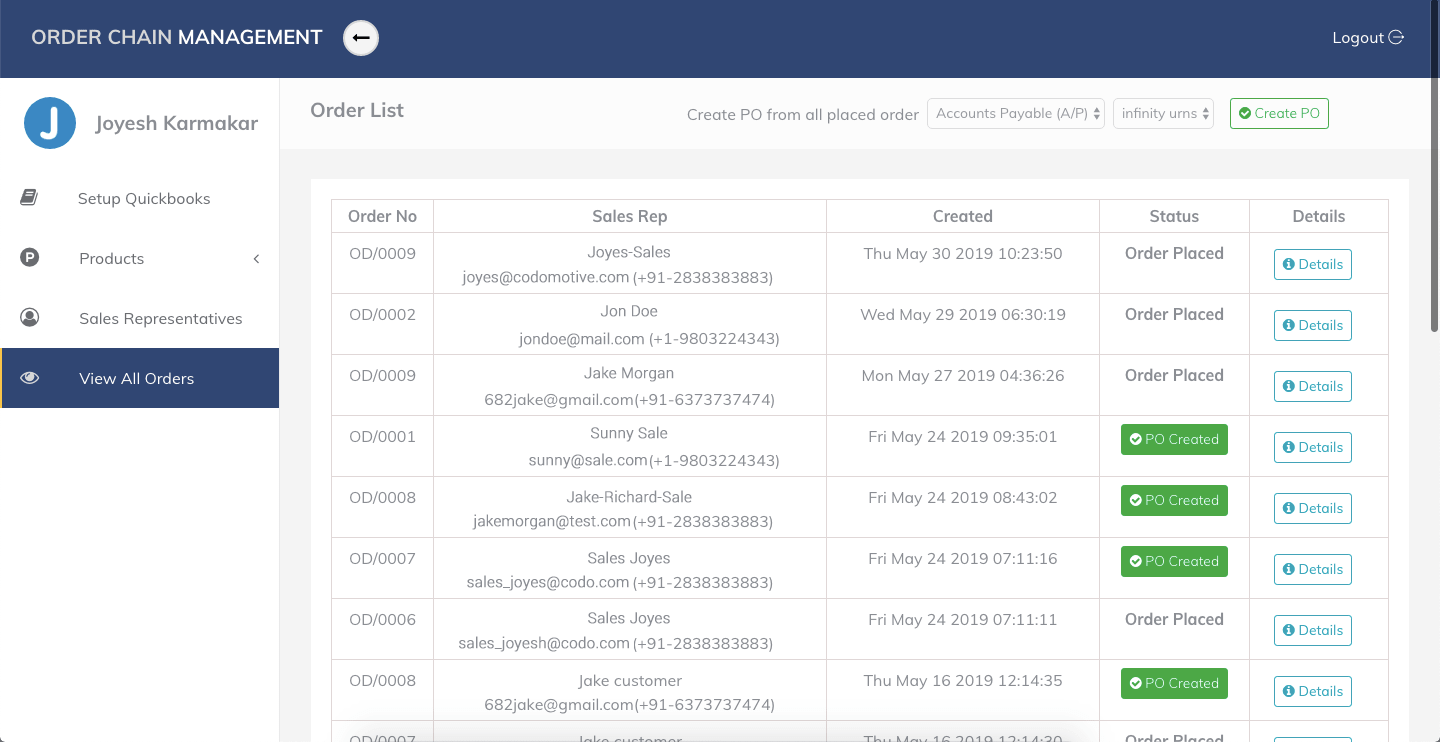
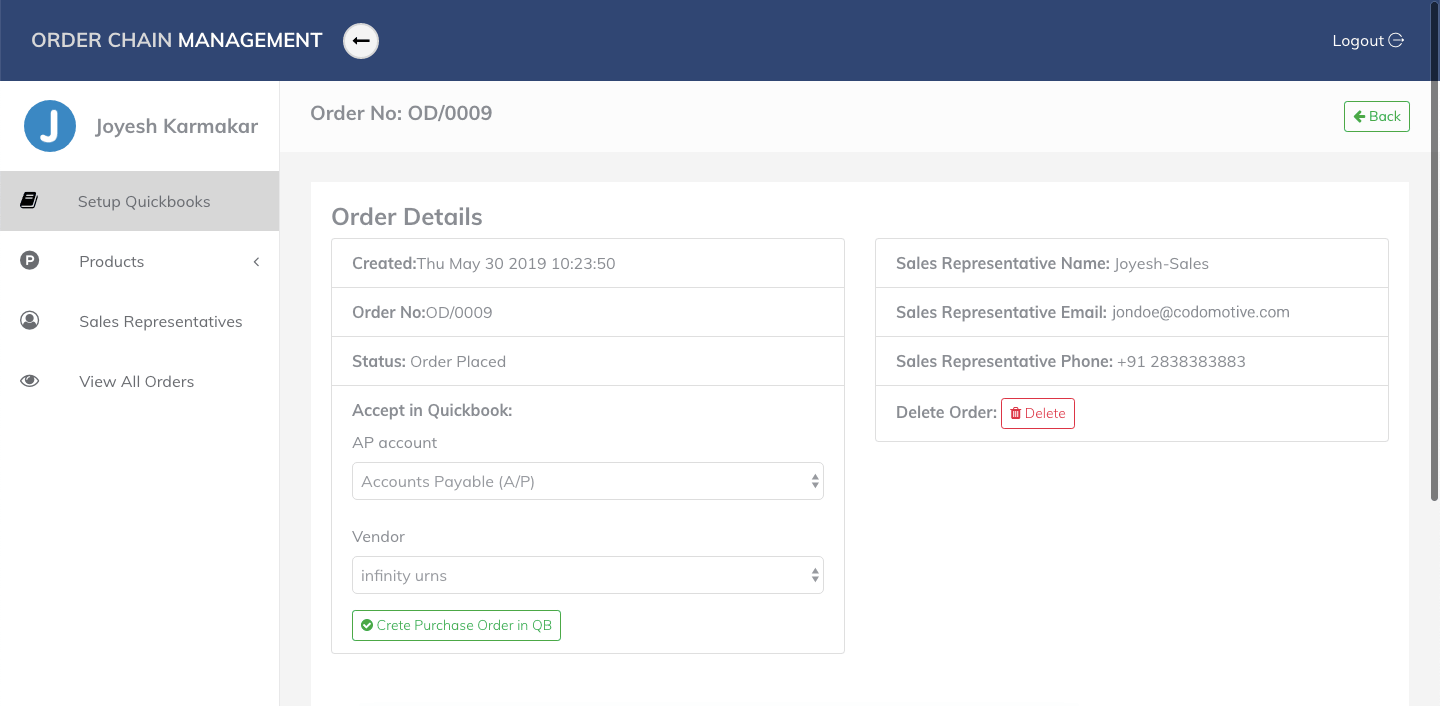
Distributors share products or items with Sales Representatives, who can in turn share them further down to customers. When an order comes in — from a rep or a customer, via the web panel or the Android app — the distributor reviews it and imports it directly into their QuickBooks account as a Purchase Order.


 Angular 7
 TypeScript
 RxJS
RxJS Spring Boot 2
 Maven
Maven KotlinRxJava
 Gradle
 Crashlytics
 Codomanage + Google Sheets
Creating Purchase Orders autonomously through QuickBooks' API meant working through a genuinely complex permissions and data model never designed for a multi-party order chain.
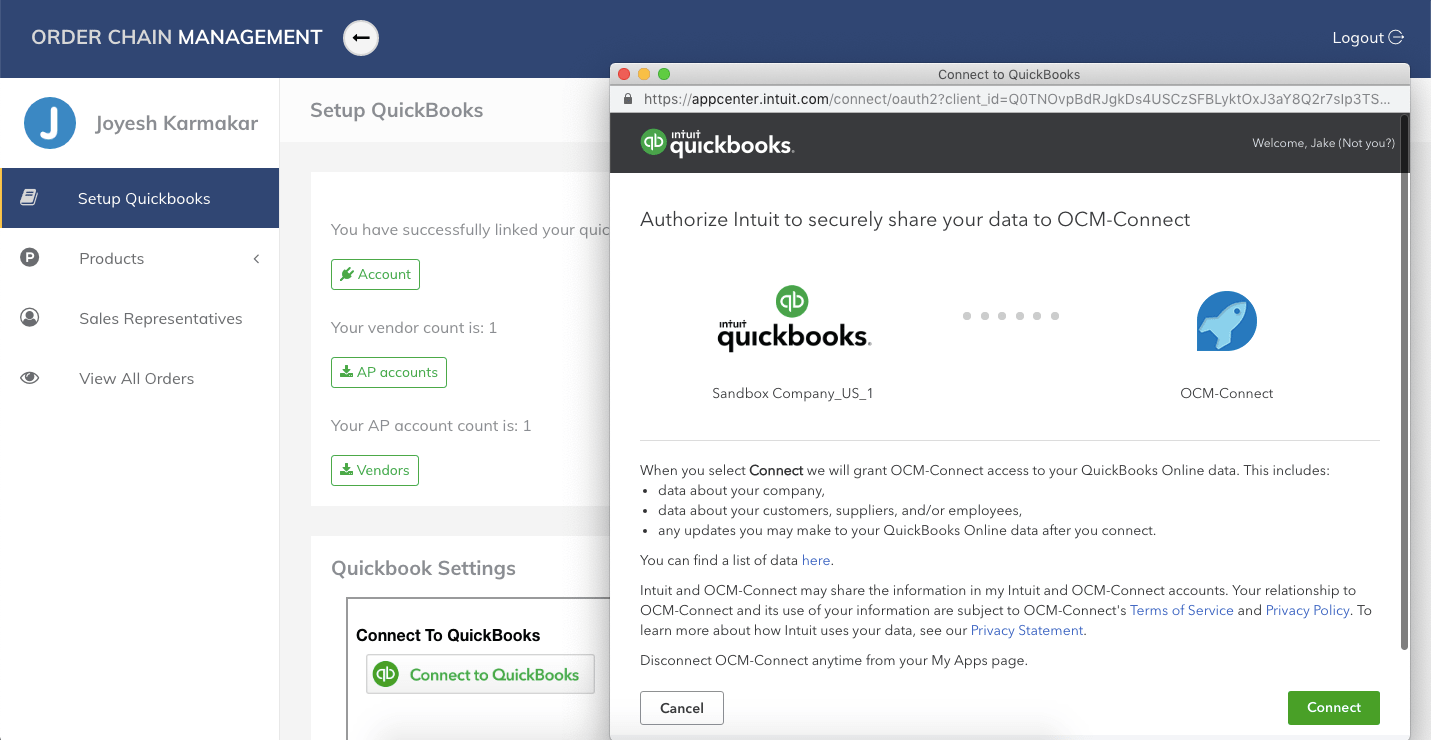
Each distributor explicitly grants permission to their own QuickBooks account; once connected, OCM imports categories and items directly and keeps the Purchase Order creation scoped to that single authorized account.
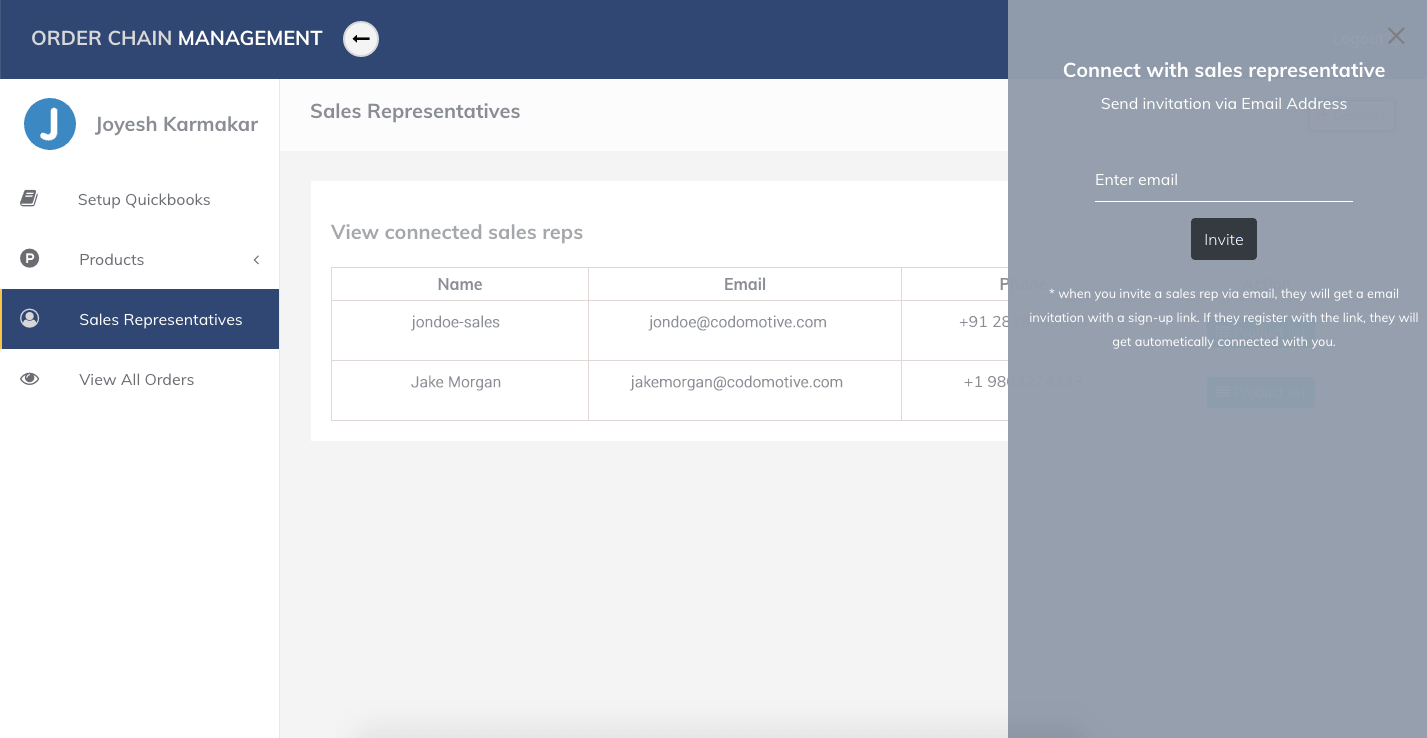
Distributors needed to bring sales reps and customers into the system without a clunky manual account-creation process for every new relationship.
A simple invitation link, usable by both distributors and reps, that lets anyone in the chain pull their own customers or vendors in without back-and-forth setup.